
On this page6 sections
Businesses often purchase walkie-talkies based on the communication range advertised in a product brochure. However, the actual performance of a two-way radio can be very different inside a commercial building, factory, shopping mall or industrial facility.
A radio that communicates clearly across an open outdoor area may struggle to connect two employees separated by several concrete floors.
Understanding why this happens is essential when selecting a reliable communication system.
Why Walkie-Talkie Range Changes Indoors
Radio signals travel through the surrounding environment, interacting with walls, floors, equipment and other obstacles.
Several factors influence indoor communication performance.
1. Reinforced Concrete Walls
Commercial buildings frequently use reinforced concrete containing steel reinforcement.
Concrete can weaken radio signals, while embedded metal can further affect signal propagation.
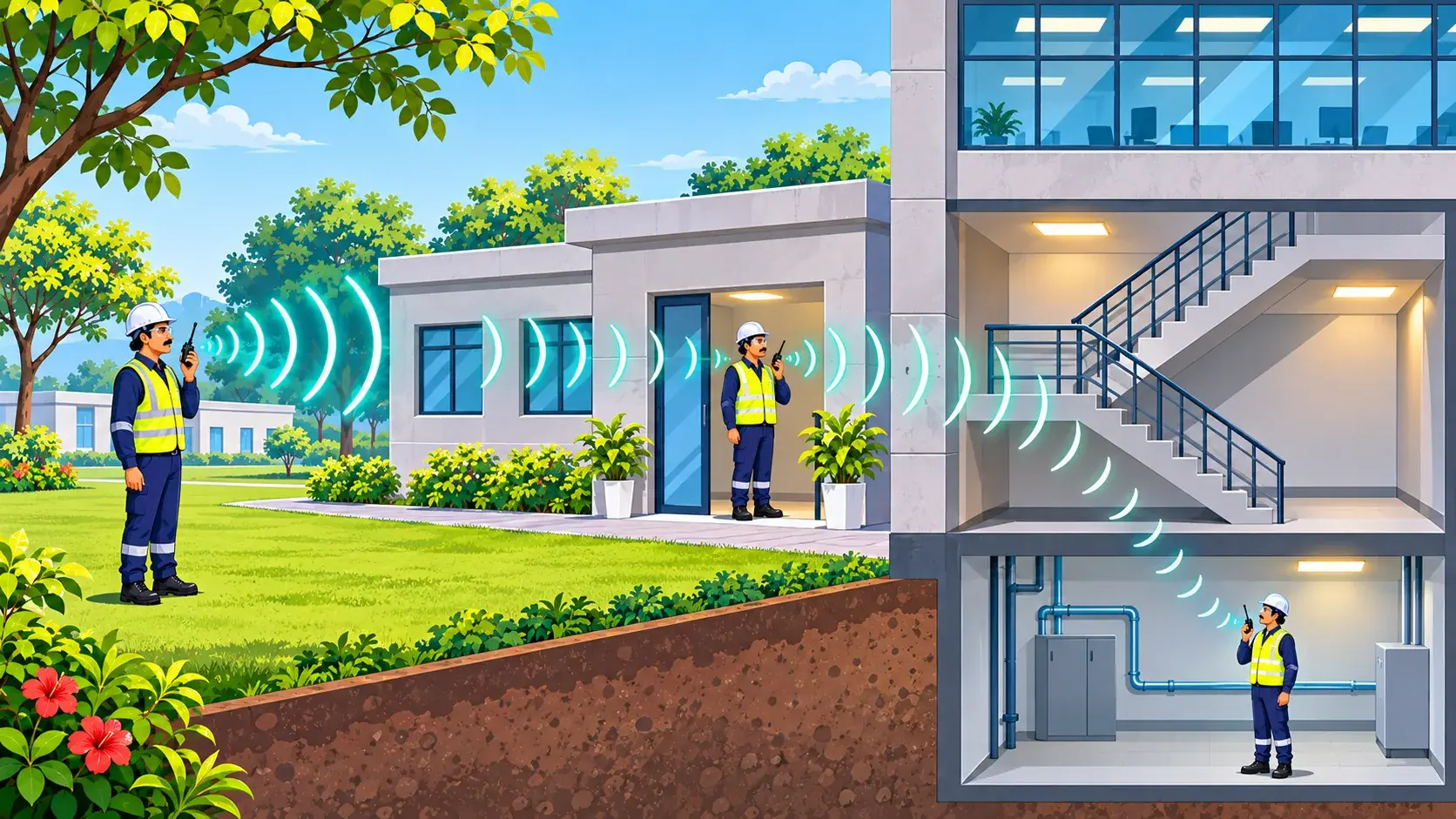
As a result, communication between two floors may be less reliable than communication over a much greater distance in an open field.
2. Basement Parking Areas
Basements are particularly challenging because signals must travel through thick floors, retaining walls and underground structures.
A security guard on the third basement level may have difficulty communicating directly with a supervisor at the main entrance.
This problem cannot always be solved by purchasing a radio with a higher advertised range.
3. Metal Equipment and Industrial Machinery
Factories and warehouses contain machinery, storage racks, steel structures and large equipment.
These surfaces can reflect, obstruct and redirect radio signals.
The resulting coverage pattern may contain areas where communication is clear and other locations where signals become weak or unreliable.
4. Building Height and Layout
A ten-storey office building does not necessarily require the same communication system as a ten-storey hotel.
The number of walls, floor materials, staircases, service shafts and radio-user locations all influence coverage.
Therefore, building height alone is not enough to predict walkie-talkie performance.
UHF vs VHF: Which Is Better for Indoor Communication?
Professional two-way radios commonly operate in VHF or UHF frequency bands.
UHF radios are frequently considered for indoor business environments because they can perform well in complex buildings.
VHF radios are often suitable for relatively open outdoor environments.
However, neither frequency band guarantees coverage in every situation.
Actual performance depends on antenna characteristics, permitted operating power, building construction, frequency selection and system design.
A site assessment is more useful than relying on a general claim that one band always performs better.
How to Improve Walkie-Talkie Coverage
Conduct a Radio Coverage Test
Before purchasing a large fleet, test suitable radio models at the locations where employees will actually work.
Important test points include:
- Basement parking levels
- Staircases and emergency exits
- Lift lobbies
- Electrical and mechanical rooms
- Rooftops
- Security gates
- Loading docks
- Remote corners of the property
Testing should evaluate whether messages are understandable and consistently received, not simply whether the radios occasionally connect.
Consider a Repeater System
A radio repeater receives and retransmits signals to extend communication coverage.
Properly positioned repeaters can help connect teams across larger buildings, industrial campuses and other challenging environments.
However, repeaters are not a universal solution. Antenna placement, feeder losses, available frequencies and regulatory permissions must be considered.
Choose Appropriate Antennas and Accessories
Radio antennas play an important role in communication performance.
Damaged antennas, incompatible accessories or poor antenna positioning may reduce effectiveness.
Businesses should use compatible accessories recommended for their equipment.
Evaluate Digital Two-Way Radios
Digital radio systems can offer useful features such as group calling, improved audio processing and fleet-management capabilities.
Some digital systems maintain intelligible audio under conditions where analogue audio becomes noisy.
However, digital radios also have coverage limits and may lose communication abruptly when signals become too weak.
Why Professional Coverage Planning Matters
Consider a hospital with security personnel at the main gate, maintenance staff in basement plant rooms and supervisors on upper floors.
Buying identical radios for everyone does not guarantee that every department can communicate.
A better approach is to identify communication routes, test coverage and determine whether handheld radios alone are sufficient.
The same principle applies to hotels, manufacturing facilities, educational campuses and commercial complexes.
Choosing the Right Communication Solution
Electrosonic Technologies Private Limited supplies professional two-way radios, repeaters and communication accessories for businesses across India.
With offices in Delhi and Mumbai, Electrosonic helps organisations compare communication equipment according to building layout, team size, operating conditions and coverage requirements.
Rather than choosing radios solely by their advertised range, businesses can evaluate a system designed around their actual working environment.
Contact Electrosonic Technologies
Website: https://electrosonictech.com
Email: info@electrosonictech.com
Phone: +91 99906 96931
Frequently Asked Questions
Can walkie-talkies work between different floors?
Yes. However, reliable communication depends on building construction, frequency, radio characteristics and the number of obstacles between users.
Why do walkie-talkies stop working in basements?
Thick concrete, underground structures and metal obstacles can significantly weaken radio signals.
Will a higher-power walkie-talkie solve indoor coverage problems?
Not necessarily. Coverage depends on several factors, and operating power must remain within applicable regulatory limits.
Do all buildings need radio repeaters?
No. Smaller buildings may achieve satisfactory coverage using handheld radios alone. Larger or more complex properties may benefit from repeaters after a proper assessment.
Related solutions
Useful next steps
Jump from this guide to the product types and support pages most buyers compare next.

How Far Can a Walkie-Talkie Really Reach? A Real-World Guide to Walkie-Talkie Range
Understand real-world walkie-talkie range across buildings, outdoor sites and terrain. Plan practical coverage tests and assess when a repeater may help.
Read guideHow Far Can a Walkie-Talkie Really Reach? A Real-World Guide to Walkie-Talkie Range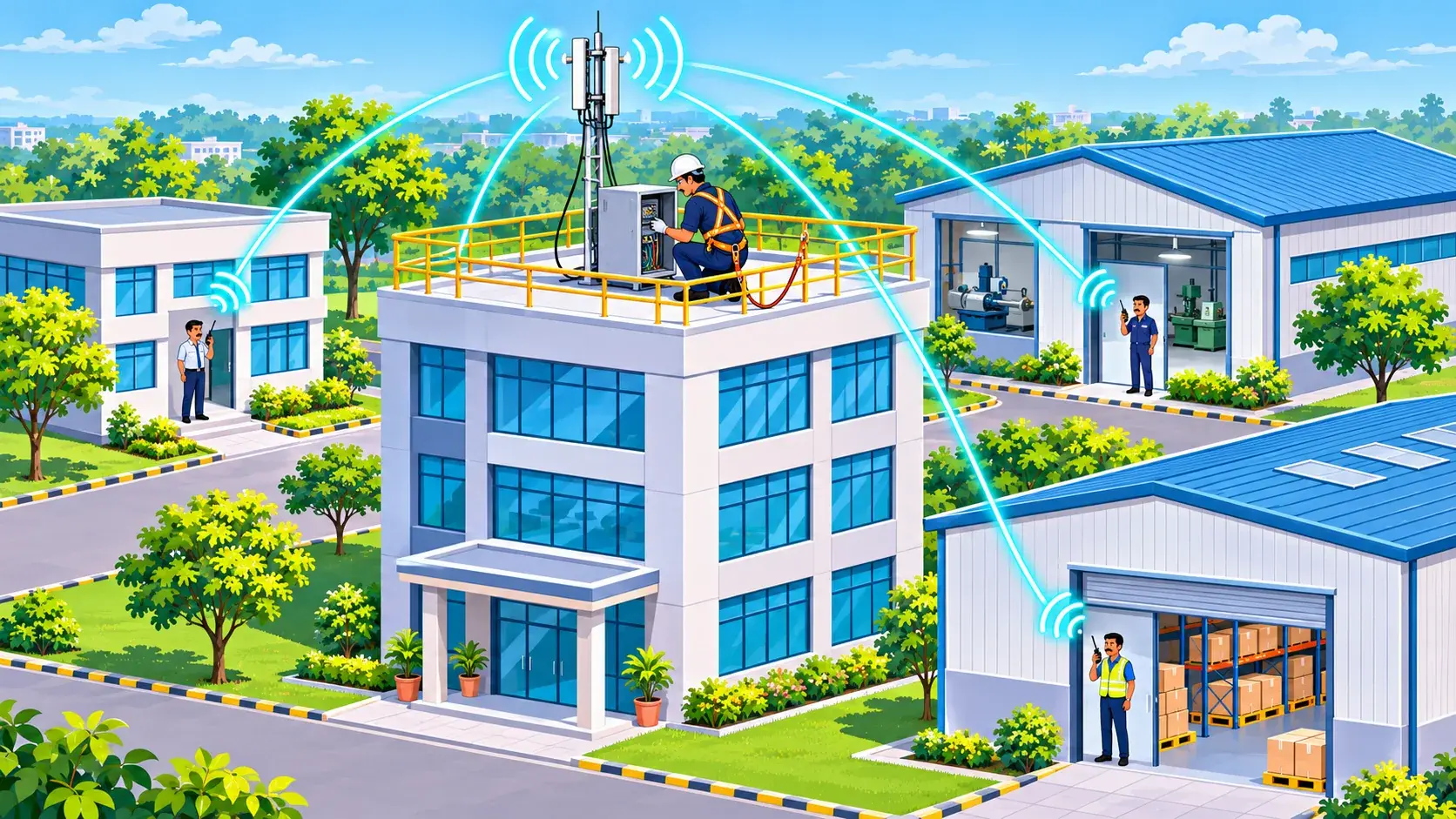
How to Eliminate Walkie-Talkie Dead Zones Across Large Business Sites
Find radio dead zones with a structured site survey. Test real working routes, antenna positions and floor coverage before choosing repeaters or alternative systems.
Read guideHow to Eliminate Walkie-Talkie Dead Zones Across Large Business Sites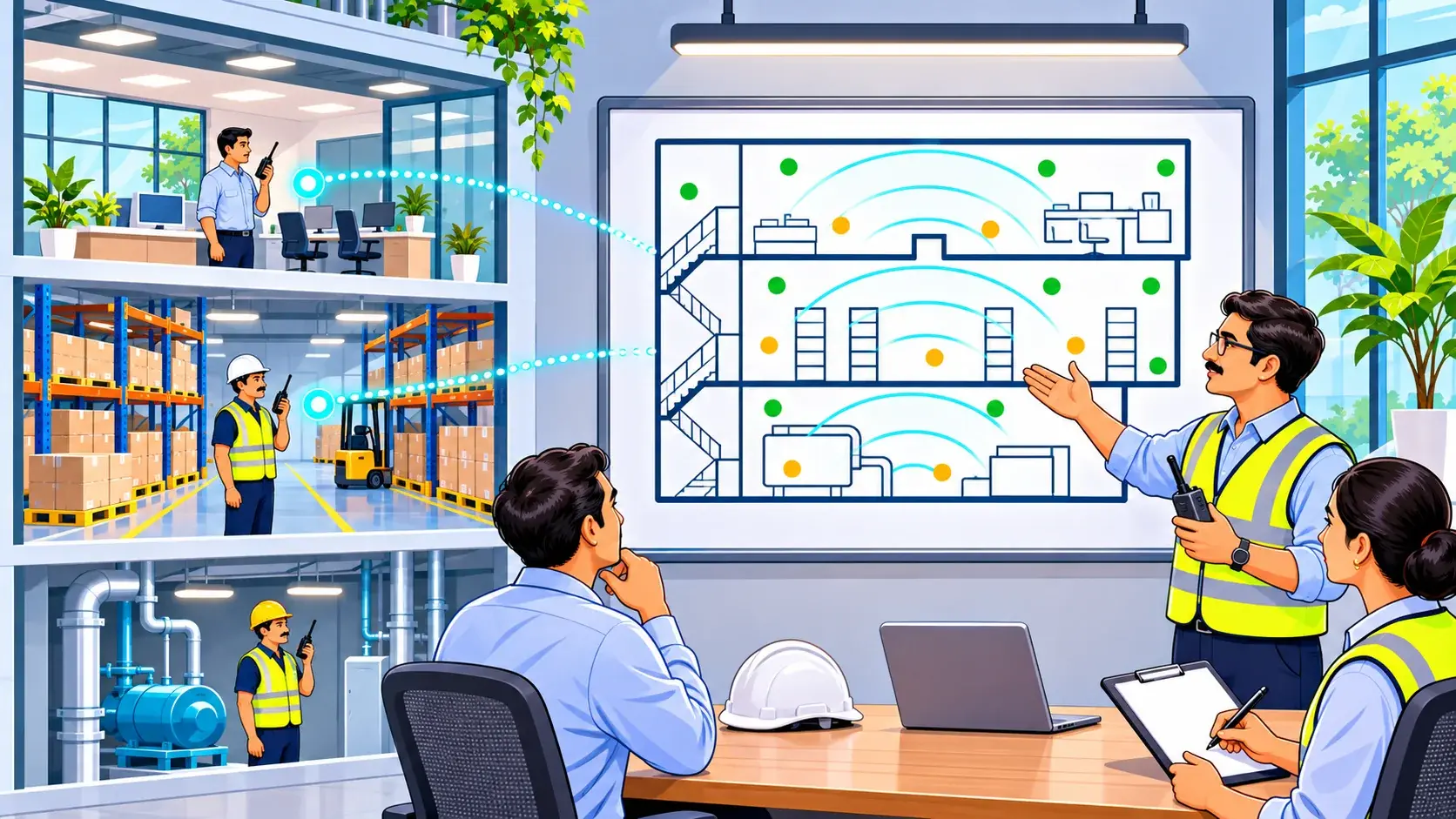
Best Walkie-Talkie Repeaters for Large Campuses and Industrial Sites
Plan repeater-backed radios for campuses and industrial sites. Assess coverage gaps, antenna installation, compatibility and support before adding more handsets.
Read guideBest Walkie-Talkie Repeaters for Large Campuses and Industrial SitesNeed help choosing?
Share your site type, team size, and coverage needs. Electrosonic can help shortlist the right radios.
Contact us