
On this page8 sections
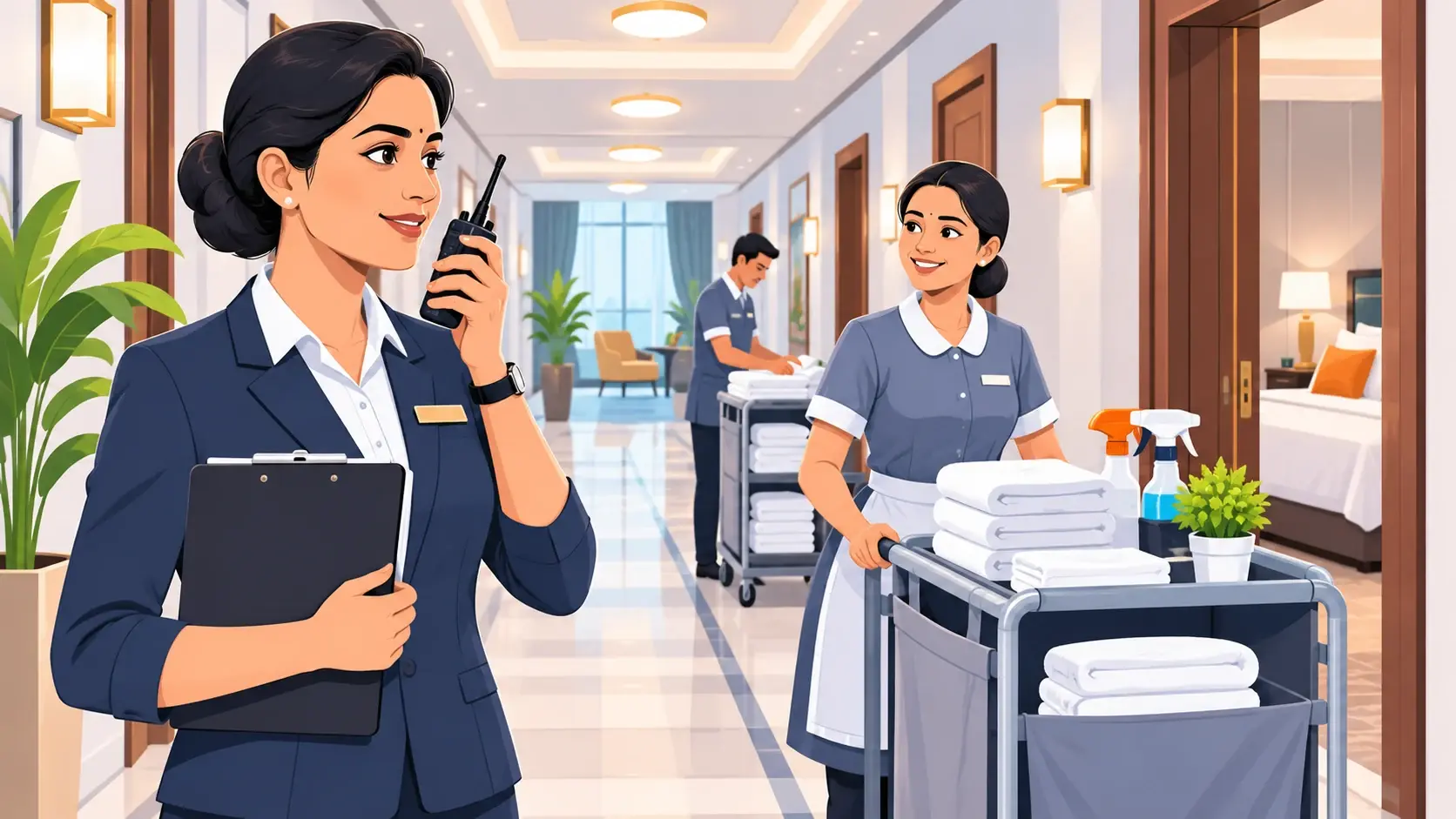
Hotel operations depend on coordination between employees working across multiple departments.
While guests primarily interact with reception staff, much of the work required to deliver a smooth experience happens behind the scenes.
Housekeeping attendants prepare rooms, maintenance technicians resolve equipment problems, security personnel monitor the property and supervisors coordinate daily activities.
When these departments cannot communicate efficiently, even small operational issues can lead to delays.
Professional walkie-talkies provide a practical way to connect hotel employees through immediate voice communication.
Why Hotel Housekeeping Needs Instant Communication
Housekeeping teams rarely remain in one location.
Employees move between guest rooms, corridors, linen storage areas, laundry facilities and service floors throughout their shifts.
A supervisor may need to contact an attendant urgently when a guest requests early check-in.
Similarly, a room attendant may discover a maintenance problem that must be resolved before the room becomes available.
Using mobile phones for every communication can introduce unnecessary delays.
Two-way radios allow employees to contact the appropriate team by pressing a button.
How Walkie-Talkies Improve Hotel Operations
1. Faster Room Turnaround
Room availability is particularly important during busy check-in periods.
Imagine a hotel where several guests arrive before their rooms are ready.
The front desk needs accurate information about which rooms have been cleaned, inspected and released for occupancy.
With an appropriate radio communication procedure, housekeeping supervisors can receive immediate updates from attendants.
This can reduce unnecessary movement between floors and help departments coordinate room readiness.
Radios complement the hotel's property management system rather than replacing formal room-status updates.
2. Better Coordination Between Housekeeping and Maintenance
Housekeeping employees frequently discover problems during room preparation.
Examples include:
- Faulty lighting
- Air-conditioning problems
- Plumbing leaks
- Damaged door locks
- Malfunctioning televisions
- Electrical maintenance requirements
A walkie-talkie allows an attendant to inform the relevant supervisor or maintenance team promptly.
The issue can then be logged, assigned and tracked through the hotel's normal maintenance process.
3. Improved Response to Guest Requests
Guests may request extra towels, additional bedding, housekeeping assistance or urgent room service support.
Radio communication allows supervisors to coordinate with available staff without repeatedly making individual phone calls.
This can be particularly useful in large properties where employees are spread across multiple floors or buildings.
4. Communication During Operational Disruptions
Hotels must also prepare for situations involving lift failures, water leakage, power interruptions and other unexpected events.
Two-way radios can support communication between engineering, housekeeping, security and management personnel.
However, radios should complement established emergency procedures, alarm systems and evacuation arrangements.
They should not be treated as replacements for certified life-safety infrastructure.
What Features Should Hotels Look for in Walkie-Talkies?
Compact and Lightweight Design
Housekeeping employees carry cleaning supplies, linen and other equipment.
A compact radio is generally easier to carry throughout a shift.
Clear Audio
Hotels contain busy kitchens, service corridors, laundry rooms and mechanical areas.
Radios should provide understandable communication in the environments where employees actually work.
Battery Performance
Hotels frequently operate multiple shifts.
Radio batteries should support the intended shift duration, with suitable charging arrangements and spare batteries where necessary.
Comfortable Earpieces
Discreet audio accessories may be useful for supervisors, reception staff and security personnel.
Hotels should choose accessories that are comfortable, compatible and appropriate for employee duties.
Multiple Communication Groups
Larger hotels may benefit from separating communication into different groups.
For example, housekeeping, maintenance and security may each have dedicated communication groups, with authorised supervisors able to coordinate between departments.
The exact arrangement depends on the selected radio system.
License-Free vs Professional Digital Radios for Hotels
Small hotels may find compliant license-exempt radio equipment suitable for straightforward communication requirements.
Larger hotels, resorts and multi-building properties may need professional digital radio systems or additional infrastructure.
The correct choice depends on:
- Number of employees using radios
- Building size and number of floors
- Basement and service-area coverage
- Required communication groups
- Battery and accessory requirements
- Applicable Indian wireless regulations
Importantly, a radio advertised as license-free should not automatically be assumed to qualify for licence-exempt operation in India.
The exact equipment variant, operating conditions and applicable approvals must be verified.
How Many Walkie-Talkies Does a Hotel Need?
The number of radios should be based on operational requirements rather than total employee count.
A hotel can begin by identifying how many employees require communication simultaneously during its busiest shift.
For example, a planning exercise might identify:
| Department | Illustrative radio requirement |
|---|---|
| Housekeeping attendants | 8 |
| Housekeeping supervisors | 2 |
| Maintenance | 3 |
| Security | 4 |
| Duty management | 2 |
| Total | 19 |
This is only an illustrative calculation, not a recommended fleet size for every hotel.
Shared radios, charging arrangements, shift changes and spare equipment should also be considered.
Best Practices for Hotel Radio Communication
Providing walkie-talkies is only the first step.
Hotels should establish simple communication procedures so that radios improve coordination without creating unnecessary noise.
Employees should use short, clear messages and identify the relevant department when necessary.
Guest-sensitive information should not be announced over general communication groups.
Staff should also understand how to report urgent incidents, maintain equipment and return radios for charging at the end of a shift.
Regular training can help ensure that the communication system remains useful during busy operations.
Choosing Walkie-Talkies for Your Hotel
Every hotel has different communication requirements.
A boutique hotel with a few floors may need a relatively simple solution.
A large resort with multiple buildings, underground parking and extensive outdoor areas may require more detailed coverage planning.
Electrosonic Technologies Private Limited helps businesses evaluate two-way radio communication equipment based on practical operating requirements.
Its product range includes analogue radios, digital radios, license-free options, repeaters and accessories.
Hotels can contact Electrosonic to discuss their property layout, staffing requirements and preferred communication setup.
Contact Electrosonic Technologies
Website: https://electrosonictech.com
Email: info@electrosonictech.com
Phone: +91 99906 96931
Frequently Asked Questions
Are walkie-talkies useful for hotel housekeeping?
Yes. They can help housekeeping attendants, supervisors and maintenance teams exchange information quickly during daily operations.
Can hotel employees use walkie-talkies without a licence?
Certain equipment may qualify for licence-exempt operation when all applicable Indian conditions are satisfied. Other professional radio systems require appropriate authorisation.
Can walkie-talkies work inside hotel lifts and basements?
Coverage varies according to building construction and radio system design. These areas should be included in coverage testing.
Should every housekeeping employee carry a radio?
Not necessarily. Radio allocation depends on team structure, communication requirements, shift patterns and operating procedures.
Related solutions
Useful next steps
Jump from this guide to the product types and support pages most buyers compare next.
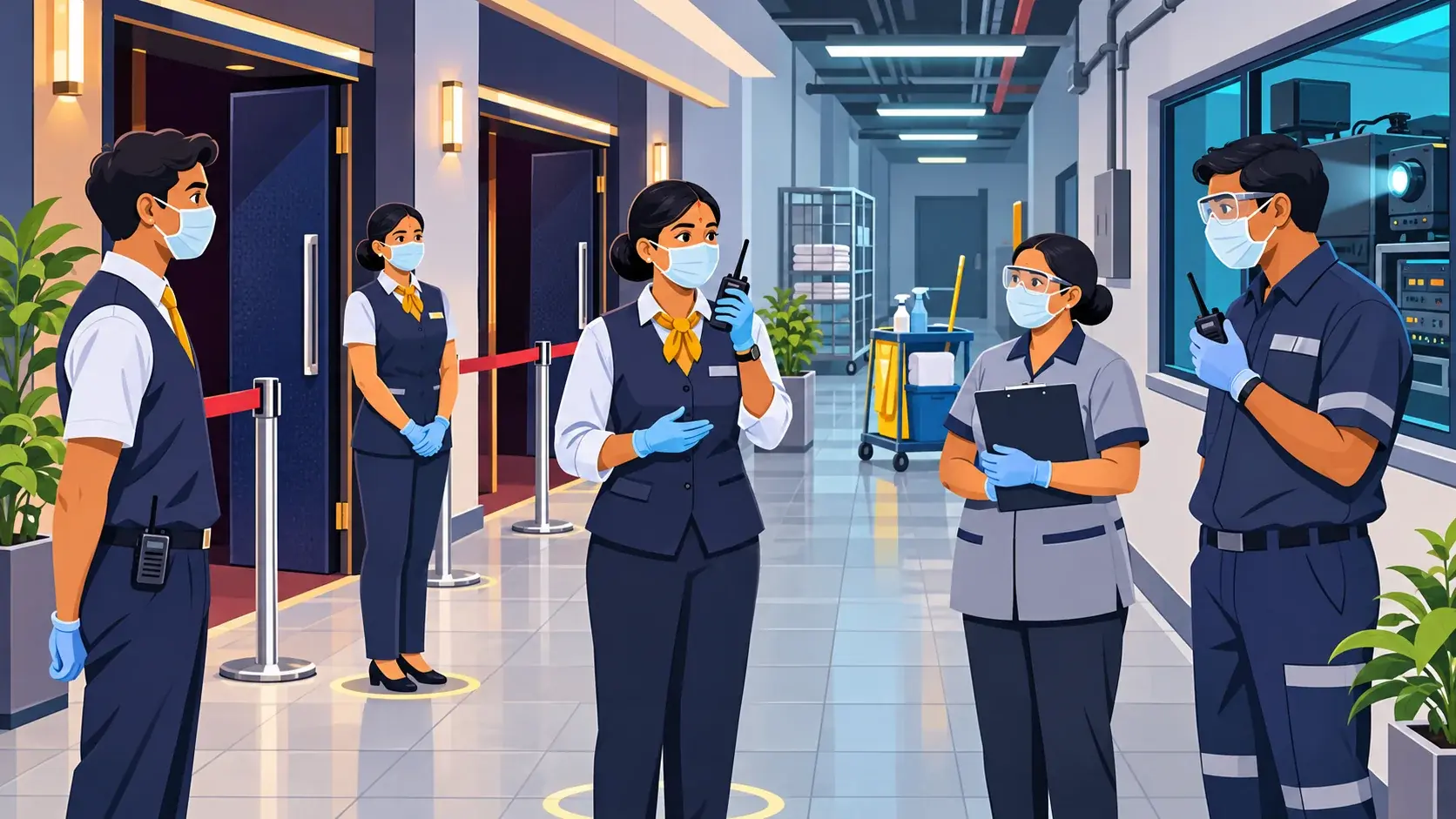
Walkie-Talkies for Cinemas and Multiplexes in India: Smoother Shows, Faster Turnarounds and Safer Crowds
Plan cinema staff radios for screen checks, housekeeping, projection and security. Compare discreet audio, coverage tests and battery needs for multiplexes.
Read guideWalkie-Talkies for Cinemas and Multiplexes in India: Smoother Shows, Faster Turnarounds and Safer Crowds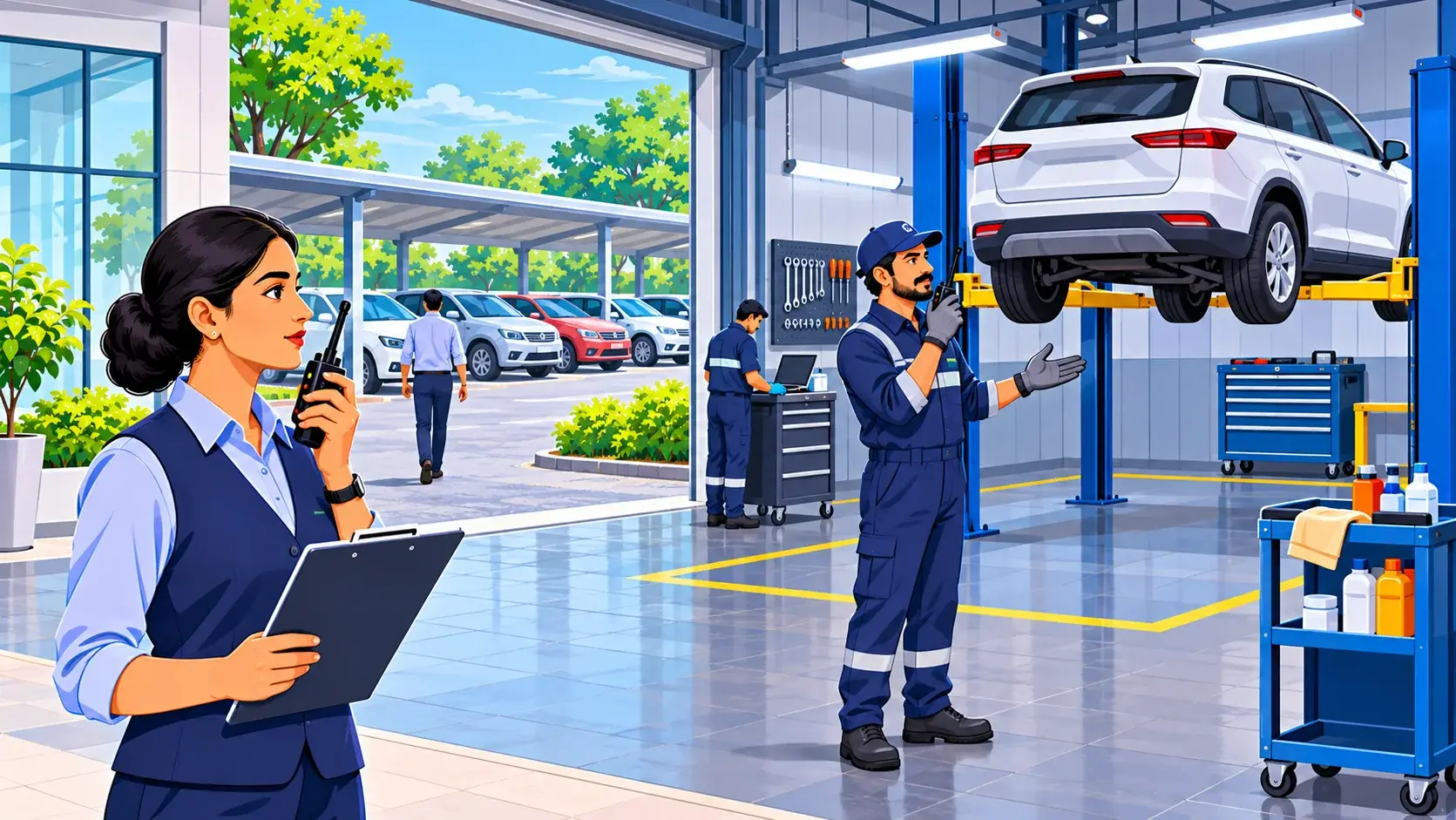
Walkie-Talkies for Automobile Dealerships, Service Centres and Vehicle Yards in India: A Practical Buyer’s Guide
Choose radios for car dealerships and service centres. Coordinate reception, workshop, parts and vehicle handovers with suitable audio, coverage and charging.
Read guideWalkie-Talkies for Automobile Dealerships, Service Centres and Vehicle Yards in India: A Practical Buyer’s Guide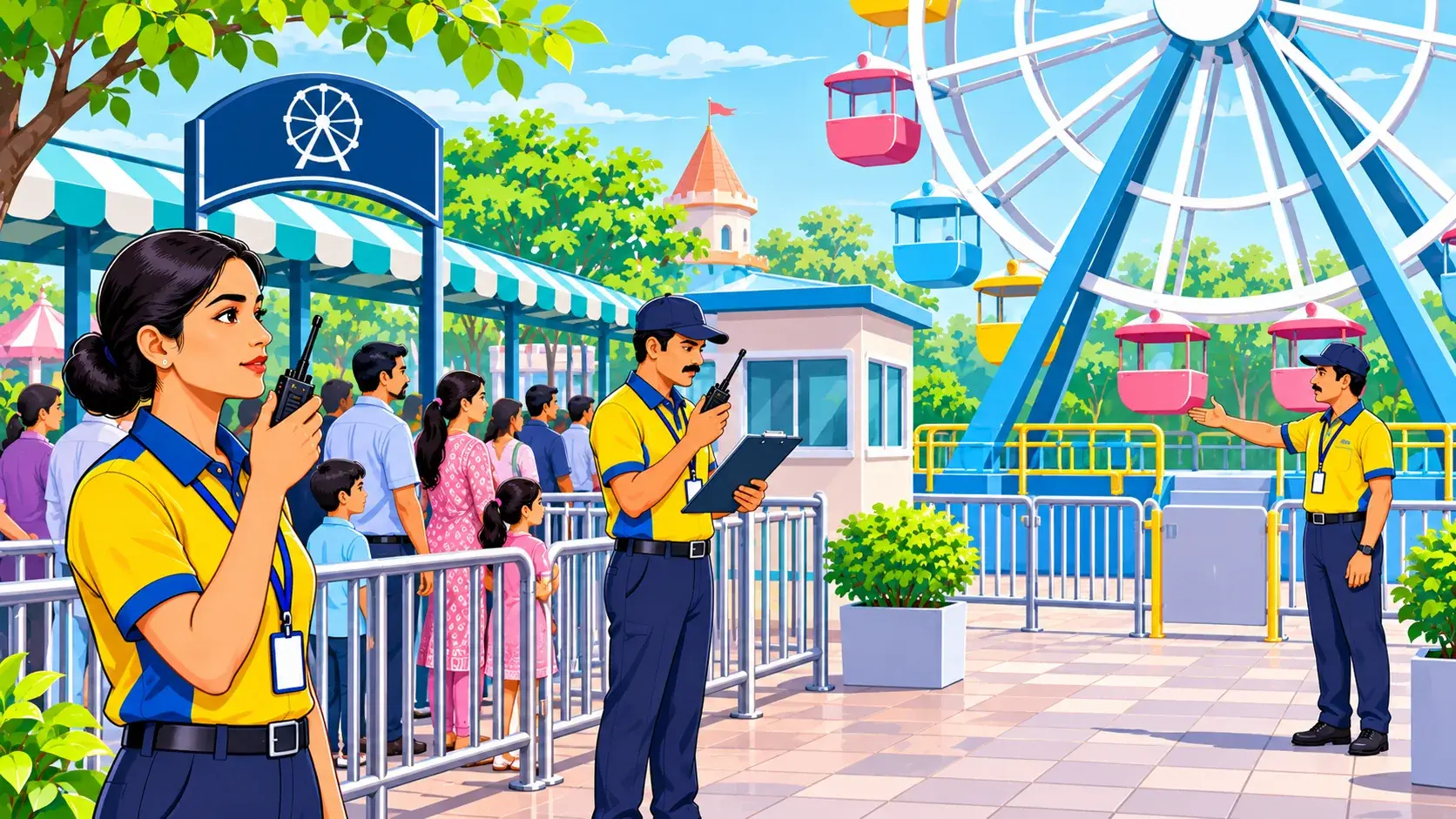
Walkie-Talkies for Amusement Parks and Theme Parks in India: A Practical Buyer’s Guide
Plan radios for theme-park ride staff, maintenance and security. Check outdoor coverage, water exposure, noise and communication between operating departments.
Read guideWalkie-Talkies for Amusement Parks and Theme Parks in India: A Practical Buyer’s GuideNeed help choosing?
Share your site type, team size, and coverage needs. Electrosonic can help shortlist the right radios.
Contact us